
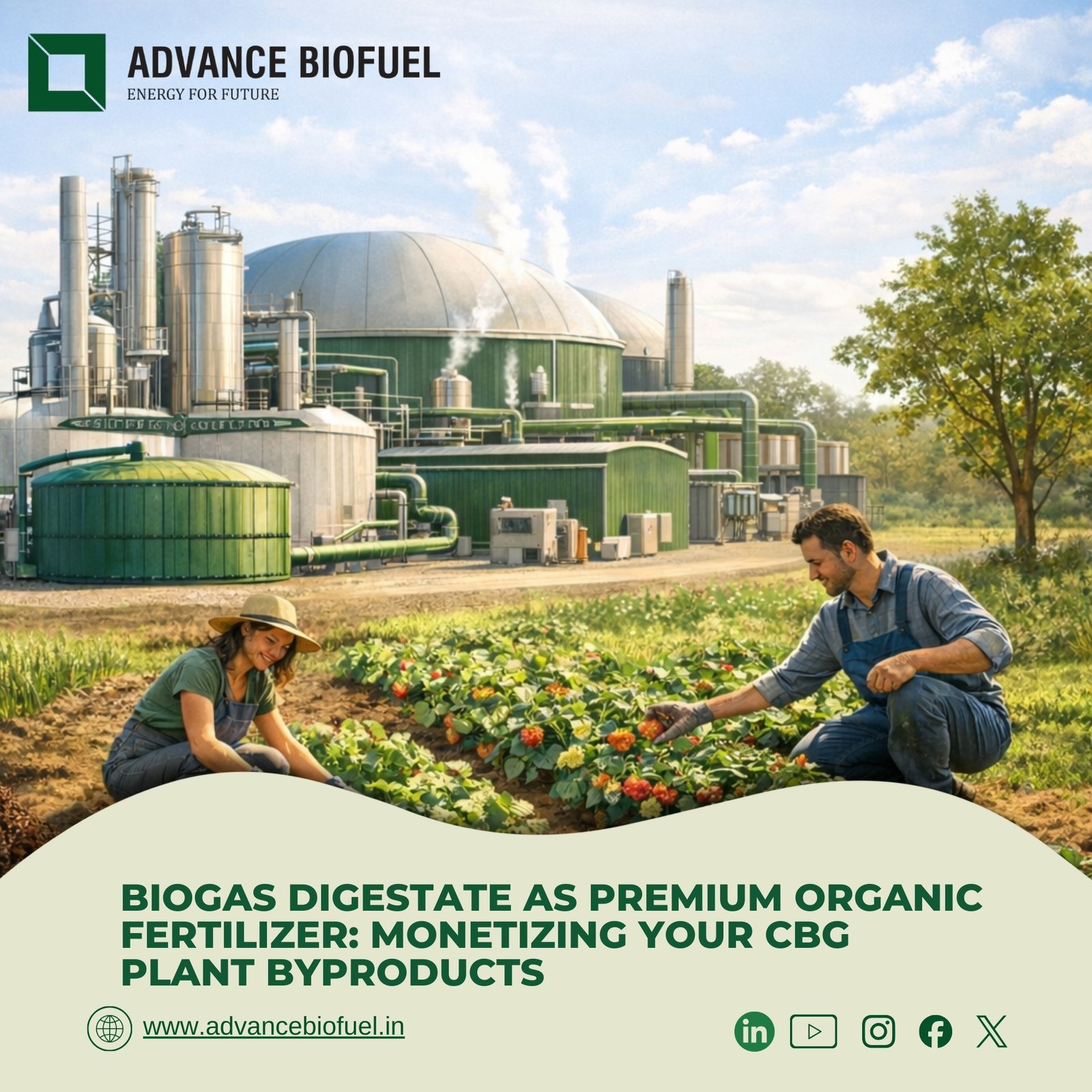
When you set up a Compressed Biogas (CBG) plant, you focus a lot on producing fuel. But not many operators realize that the leftover material — called digestate — can itself become a valuable product. This by-product is rich in nutrients and organic matter that plants need. With the right processing, digestate can be turned into premium organic fertilizer, creating a new and steady revenue stream beyond selling biogas.
What Is Digestate?
Digestate is what remains after anaerobic digestion, the microbial process that breaks down organic waste to produce biogas. It comes in two forms: a liquid fraction, rich in soluble nutrients like nitrogen and potassium, and a solid fraction, which holds more phosphorus and organic matter. Combined, this mixture carries many plant nutrients and soil-friendly compounds.
Why Digestate Matters as Fertilizer
Regular compost and manure are useful, but digestate from a biogas/CBG plant has some unique advantages:
- It contains significant organic matter that supports soil life.
- It often contains beneficial microbes that help make nutrients available in the soil.
- When processed correctly, it can act as a high-quality organic fertilizer or soil amendment.
In some studies of biogas residue, digestate was found to have 36–49% organic matter and a notable portion of humic acid (about 10–24.6%) — a compound linked with better soil structure, nutrient exchange, and water retention.
This mix of nutrients and organic compounds makes digestate more than just waste — it can be a soil-boosting product that farmers value.
How Digestate Becomes Organic Fertilizer
You can’t always take raw digestate straight from the digester to the farm. It needs processing so that its nutrients are stable, safe, and easy to use. Here are common processing steps:
1. Separation of Liquid and Solid Fractions
Separating the digestate helps direct each part to best uses:
- Liquid fraction can be used as a liquid fertilizer or foliar feed, especially when diluted.
- Solid fraction is often composted and turned into granular products.
2. Composting
By composting the solid digestate with other organic matter, you can create a fermented organic manure product that’s easier to package and sell.
3. Drying & Granulation
Some processors go further and create pellets or granules that store better and fetch higher prices on the market.
When done right, these steps improve handling, reduce odour, and create a market-ready organic fertilizer that can compete with traditional products.
Market Demand for Organic Fertilizers in India
There’s a growing appetite among Indian farmers for organic fertilizers:
- Organic and soil-enriching products help improve soil water-holding capacity and soil structure over time — something chemical fertilizers can’t do.
- India currently has the capacity to produce millions of tonnes of bio-manure from digestate annually, showing a huge untapped nutrient pool.
- Using digestate instead of synthetic fertilizers can reduce water use, oil use, and greenhouse gas emissions, which appeals to sustainability-minded buyers.
Despite this potential, many fertilizer companies have not yet embraced digestate widely because of a lack of fixed procurement prices and clear regulatory standards. That gap, however, offers an opening for innovative CBG plant operators who develop certified, high-quality products.
Certified Organic Fertilizer: Why It Matters
If you want to sell digestate as a premium product, certification is key.
Certified organic fertilizers often:
- Carry better prices
- Are preferred by organic farmers
- Can be sold through more formal retail channels
While digestate itself may not always automatically qualify as a certified fertilizer without processing, post-treatment like composting and testing can help meet organic fertilizer standards and reassure customers about quality and safety.
Revenue Streams from Digestate
Digestate adds real money to your CBG business when you:
Sell Processed Organic Fertilizer
Once processed into granules or compost, digestate products can be priced on par with other organic fertilizers — especially if they’re certified.
Provide Custom Soil Amendment Services
Farmers may pay for tailored soil amendments based on soil testing.
Access Carbon or Sustainability Credits
Using digestate to replace synthetic fertilizers can contribute to greenhouse gas reduction claims, which may tie into environmental incentive programs.
Benefits Beyond Monetization
Digestate isn’t just about profit — it also delivers wider value:
- Soil Fertility: By adding organic matter and nutrients, digestate supports long-term soil health.
- Environment: Replacing chemical fertilizers with digestate reduces energy use in manufacturing and lowers emissions.
- Circular Economy: You turn waste into both clean energy and valuable fertilizer — a win-win for sustainability.
Challenges and How to Overcome Them
Even though digestate has great potential, there are a few hurdles:
1. Nutrient Variability
Digestate nutrient content varies based on feedstock and digester conditions, which means it needs to be tested and possibly blended before sale.
2. Market Recognition
Many farmers still prefer chemical fertilizers due to familiarity. Educating buyers on the long-term soil benefits and environmental advantages of digestate products helps build demand.
3. Regulatory Standards
Clear organic fertilizer standards and certification pathways help justify higher prices and build buyer trust.
Conclusion
Digestate from your CBG plant is far from waste. With sensible processing and marketing, it can be a premium organic fertilizer that delivers soil benefits and steady revenue. As India’s clean energy and sustainable agriculture markets grow, digestate turns a by-product into a value driver for your business.

